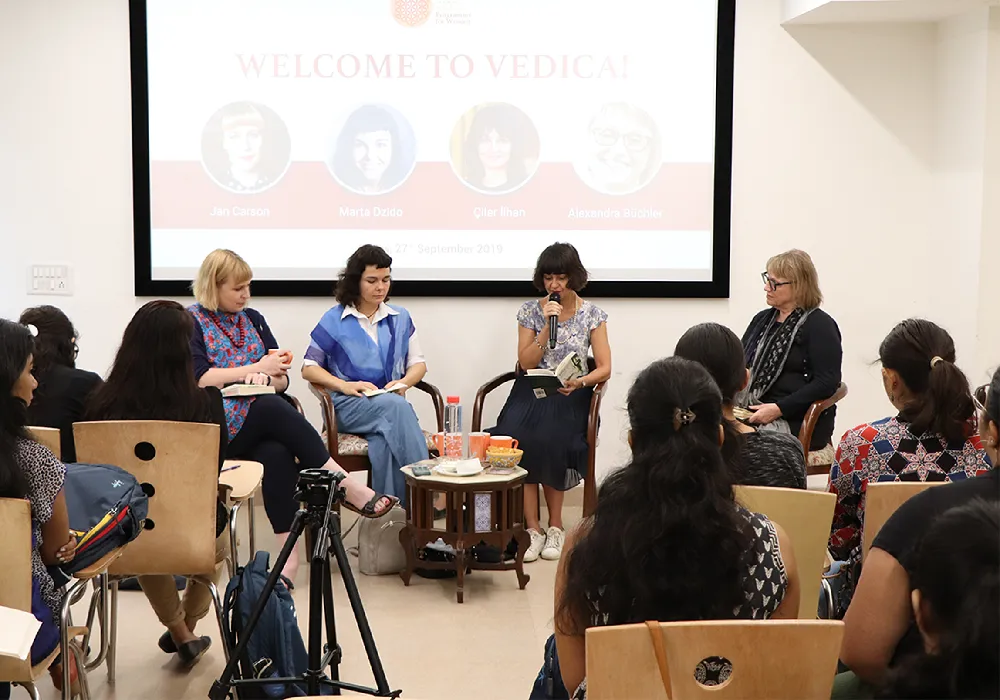
Choosing your first job often means making decisions with limited information. A job title and description can tell you what a role involves on paper, but they rarely explain what the work is like day to day. Speaking to people already working in your field can help you understand workplace expectations, explore different career paths and make more informed decisions. Some of these connections may eventually become leadership mentors, while others may simply offer a useful perspective at the right time.
Professional networking is not just about finding job opportunities. It is also about learning from other people’s experiences, asking better questions and understanding the professional world before entering it. This article explores why these relationships matter, how to start building them without an established professional circle, and how to maintain them over time. It also looks at how the Post Graduate Programme in Management Practice and Leadership at the Vedica Scholars Programme incorporates professional engagement into the learning experience.
Why Professional Relationships Matter Before a First Job
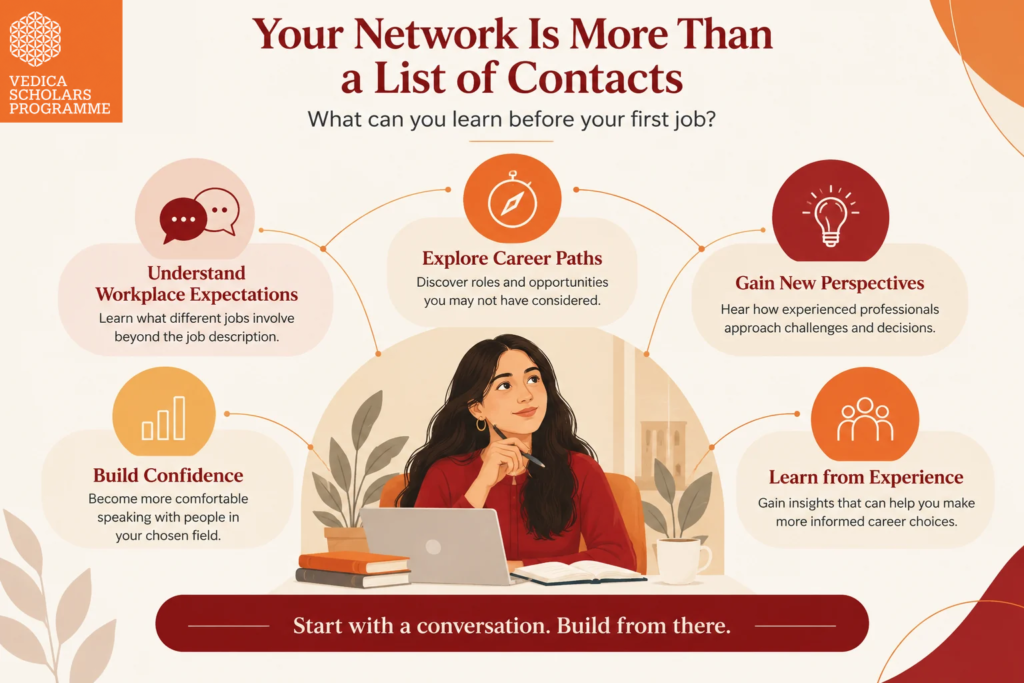
A job title rarely tells you everything about a role. Someone working in consulting, finance or operations can explain what a typical week involves, which responsibilities require independent judgement and what challenges might not be obvious from a job description.
These conversations can help you:
- Explore different career paths: Learn about roles you may not have considered and understand how they differ in practice.
- Understand workplace expectations: Find out how teams communicate, how priorities are set and how professionals approach feedback.
- Gain a different perspective on your CV: Receive feedback from someone familiar with your chosen field.
- Discover learning opportunities: Hear about relevant events, industry discussions and professional resources.
- Build confidence: Become more comfortable speaking with people in professional settings before starting your first job.
For those considering management careers, conversations with experienced professionals can also reveal how workplace decisions are made, how teams handle competing priorities and which skills become useful in different situations. These insights can help you understand what to expect, although professional judgement develops through practical experience, feedback and reflection as well.
Networking does not guarantee employment, and not every conversation will lead to a lasting connection. Its value lies in gaining a clearer understanding of your options and making career decisions with more information than a job description alone can provide.
How to Start Without a Professional Circle
Knowing why networking matters is one thing. Knowing whom to approach can be more difficult, especially if you are a student or recent graduate without established professional contacts. You do not need an impressive CV or an influential family to begin. Start with people and opportunities already within reach.
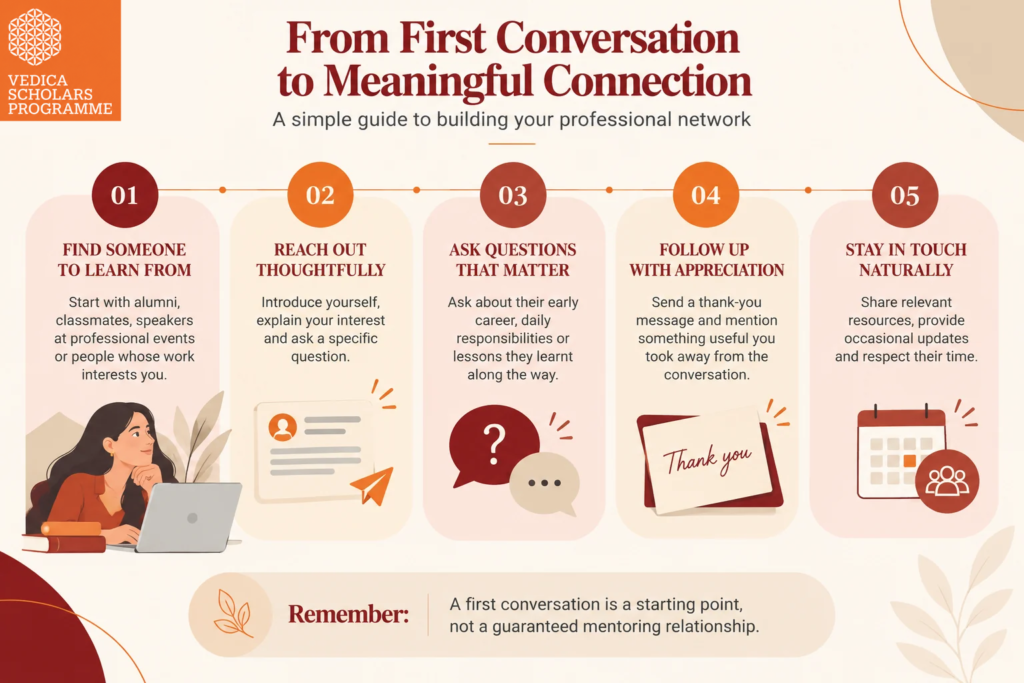
- Alumni: People who studied at your college or programme share a starting point with you. This common connection can make it easier to begin a conversation. The Vedica Scholars Programme has an alumni network of more than 900 women, providing a community that Scholars may explore when seeking perspectives on education and careers. Whether an alumna is available to connect will depend on her individual time and interest.
- Talks, workshops and professional events: Attend relevant sessions and prepare one thoughtful question about the speaker’s work or experience. Guest Speakers, Workshops and Guest Lectures are among the features of the Vedica Scholars Programme.
- LinkedIn: Send a short, personalised message explaining why you are reaching out. You can also begin by engaging thoughtfully with a professional’s posts rather than immediately asking for a conversation.
- Peers: Classmates, fellow interns and former colleagues can become valuable professional contacts as your careers develop. Staying connected does not have to involve a formal networking activity.
If you are unsure how to approach someone, a short message that respects their time is a good starting point.
For example:
Hello [Name], I am a final-year student at [college] and recently read your talk on [topic]. I am trying to understand what the first two years in [field] are like. If you have fifteen minutes in the coming weeks, I would appreciate the opportunity to hear about your experience. Thank you for considering this.
The message explains why you are reaching out and makes a specific request without assuming the person owes you their time. It also gives them the freedom to decline.
Asking Questions Worth Answering
Once someone agrees to speak with you, the questions you ask can shape how much you learn from the conversation.
Broad questions such as “Can you tell me about your career?” can be difficult to answer in a short conversation. Specific questions give the other person a clearer starting point and help you explore something relevant to your own decisions.
You could ask:
- What did your first year in this role involve on a day-to-day basis?
- Which skills turned out to be more important than you initially expected?
- What would you approach differently if you were starting your career again?
- What helped you decide which opportunities to pursue early in your career?
You do not need to ask every question or treat the conversation like an interview. Listen to the answers, ask a relevant follow-up question and be open to perspectives that differ from your expectations.
The aim is not to impress someone with how much you know. It is to understand their experience and take away information that may help you make better decisions.
Leadership Mentors and How Professional Relationships Develop
A first conversation is an introduction, not automatically the beginning of a mentoring relationship. Professional relationships often develop through repeated interactions, mutual respect and a genuine interest in learning from one another.
If a conversation has been useful and you would value further guidance, you can ask whether the person would be open to staying in touch or offering occasional advice. However, it is important to respect their time and recognise that not everyone will be able to take on that role.
Some educational programmes also provide opportunities to engage with experienced professionals. The Vedica Scholars Programme has a mentorship network of more than 150 accomplished women leaders. Programme Mentors and the Shadow a Woman Leader module are among its features, offering opportunities to engage with leadership and professional experience as part of the wider learning environment.
For someone still exploring their career direction, hearing how experienced leaders have approached decisions, challenges and changing responsibilities can provide perspectives to consider when making their own choices. The existence of a mentorship network does not, however, mean that every Scholar is individually paired with a mentor.
Regardless of how a professional connection begins, maintaining it requires consideration and consistency. A few simple habits can help:
- Send a thank-you message: Follow up within a day or two and mention something specific you found useful.
- Share something relevant: If you come across an article or resource connected to your conversation, consider sending it to the person.
- Provide an update: If you act on a suggestion, let them know what you learned from the experience.
- Stay in touch occasionally: Reach out when you have something relevant to share rather than contacting someone only when you need a favour.
- Respect their boundaries: Accept that people may be busy, respond slowly or be unable to help.
Consider a hypothetical example. A student contacts an alumna after attending a talk and asks how she chose between two early career opportunities. The alumna suggests seeking feedback regularly during internships. The student sends a thank-you message the next day, mentioning why the suggestion was useful. A few months later, she gets in touch again to share how she applied the advice during her own internship.
The follow-up gives the conversation a natural continuation. It does not guarantee a long-term relationship, but it creates an opportunity for one to develop.
Frequently Asked Questions
1. Why should students build a professional network before their first job?
Early conversations can help students understand different roles, workplace expectations and possible career paths. They can also make professional interactions feel more familiar before entering the workplace.
2. How can a graduate start networking without a professional circle?
Start with alumni, classmates, professional events and people whose work interests you. Send a short, personalised message asking for a conversation or perspective rather than immediately requesting a job. Not everyone will respond, and that is a normal part of networking.
3. How can students approach leadership mentors?
Begin by asking a thoughtful question about the person’s work or experience. If the conversation goes well, you can ask whether they would be open to staying in touch or offering occasional guidance. A mentoring relationship takes time to develop and should not be assumed after one conversation.
4. How can networking help with long-term management careers?
Conversations with experienced professionals can help you understand how managers approach decisions, work with teams and respond to challenges. These insights can inform your career choices, alongside the knowledge and judgement you develop through your own experience.
5. How can networking support women’s career development?
Conversations with experienced women professionals can offer perspectives on different career paths, workplace experiences and professional decisions. These exchanges may help individuals consider their options and learn from others, although each person’s experience will be different.
Conclusion
Building a professional network before your first job is not about collecting contacts or expecting every conversation to lead to an opportunity. It is about learning from other people’s experiences, asking thoughtful questions and gradually understanding the professional world you hope to enter.
For students exploring management careers, conversations with experienced professionals and leadership mentors can offer useful perspectives on workplace expectations and career choices. The Vedica Scholars Programme, with its alumni network and opportunities for professional engagement, provides a setting in which Scholars can explore these perspectives as part of their wider learning experience.
Ultimately, meaningful professional relationships develop through curiosity, mutual respect and consistency. You do not need to know everyone or have your career mapped out before your first job. Starting with one genuine conversation is enough.