
Imagine being asked in an interview to explain what you’re good at, what kind of work interests you, and why you’re suited to a role. The questions sound simple, but answering them with clarity takes preparation.
At the Vedica Scholars Programme, the career support programme begins well before a recruiter enters the picture. Through communication practice, interview preparation, guidance from management programme mentors, personal growth and exposure to professional environments, Scholars build the confidence to approach career decisions with clarity.
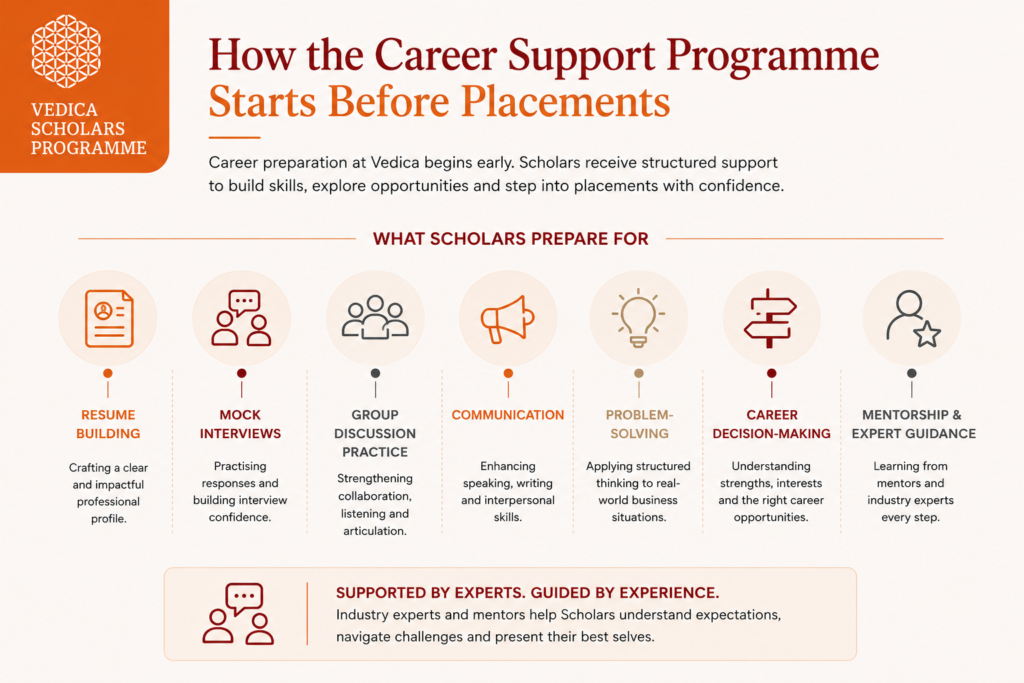
How the Career Support Programme Starts Before Placements
Career preparation isn’t limited to the final stretch of the programme. Scholars receive structured support throughout, including:
- Resume building
- Mock interviews
- Group discussion practice
- Communication and problem-solving
- Career decision-making
Industry experts and mentors contribute here too, helping Scholars understand what professional situations will actually demand of them.
Confidence Begins With Knowing How to Communicate
A strong CV introduces you to a recruiter, but communication shapes what happens next.
The Thinking and Communicating for Impact track sits alongside management and personal growth, with Scholars working on writing, speaking, critical thinking and interpersonal communication. These skills matter most during interviews and professional conversations, where the goal isn’t to sound confident but to explain ideas clearly and respond thoughtfully.
Communication also plays a role in how confidently Scholars grow into their careers, particularly where progress depends on visibility, negotiation and articulating one’s own contribution.
Learning From People Who Have Been There
Career decisions are easier to understand when you can learn from people who’ve already made them.
The programme provides access to leadership mentors and industry professionals who offer real perspective on careers and workplace life. The Shadow a Woman Leader module adds another layer, giving Scholars first-hand insight into leadership careers by observing leadership up close rather than reading about it.
For Anusha Das, a Vedica Scholar from the Class of 2023, this took shape through her Shadow a Woman Leader experience at Bain & Company in 2023, guided by Megha Chatri, Senior Director, Bain & Company. Anusha has said she arrived at the programme with excitement and uncertainty in equal measure, and the experience pushed her to question her own assumptions and step outside her comfort zone. She left eighteen months later with more confidence and clarity, and today works in Human Resources at Elevate Homes.
Her story is one example of how a well-placed moment of professional exposure, paired with the right guidance, can shift how someone sees their own capabilities.
Choosing the Right Opportunity, Not Just Any Opportunity
Being career-ready doesn’t mean applying for every role available. It means understanding which opportunities fit your interests, strengths and longer-term goals.
Pre-placement talks let organisations explain their roles and expectations before Scholars decide where to apply. Scholars can then pursue opportunities that genuinely resonate, supported by the Career Development Committee and Programme Team, who guide Scholars through the process well beyond a single placement season.
This makes career preparation a process of informed choice, not just finding a job. It’s also central to women’s career development: building a career means knowing which opportunities are worth pursuing, not only reaching the next one.
What Management Programme Mentors Add
Mentorship offers something a checklist can’t: perspective. Management programme mentors help Scholars think through professional questions, understand workplace expectations and reflect on their own goals.
Anusha’s experience with her mentor is a small but useful illustration of this. A single, focused connection during her Shadow a Woman Leader experience shaped how she thought about her own path afterwards. A mentor doesn’t decide what career someone should choose, but the right conversation helps a Scholar ask better questions and decide with more confidence.
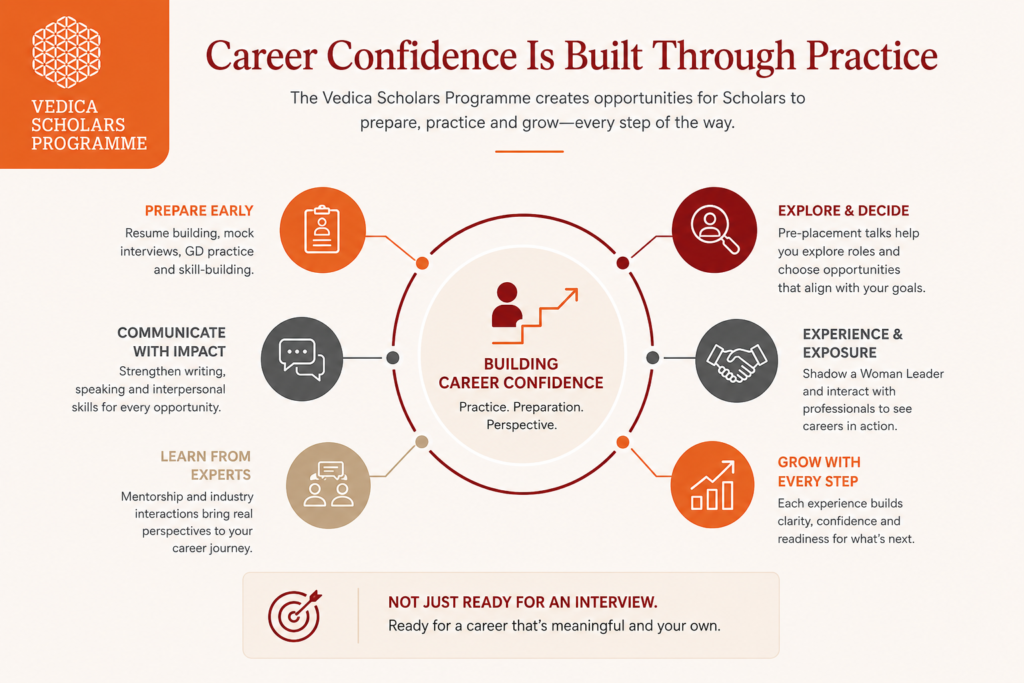
Confidence Is Built Through Practice
Confidence rarely appears all at once. It develops through small moments: answering a hard question in a mock interview, presenting to a group, speaking with an industry professional, or recognising which opportunity actually aligns with your goals.
The Vedica Scholars Programme brings these experiences together through management education, communication, personal growth, mentorship and career preparation. The result isn’t preparation for one interview or one recruitment cycle. It’s growing more comfortable with the professional situations that keep arising throughout a career.
Frequently Asked Questions
1. What does the career support programme include?
Resume building, mock interviews, group discussion practice, communication, problem-solving and career decision-making, alongside placement support.
2. When does career preparation begin?
It’s built into the broader learning experience, not limited to the final recruitment stage.
3. Why is communication important for career development?
Clear communication helps professionals explain their ideas, experience and strengths during interviews and workplace conversations.
4. How can mentors help with career development?
Mentors offer professional perspective, help Scholars reflect on their goals, and provide insight into workplace expectations and career possibilities.
5. Does the Vedica Scholars Programme help Scholars choose suitable roles?
Yes. Pre-placement talks let organisations explain their roles and expectations, so Scholars can pursue opportunities that align with their goals, supported by the Career Development Committee and Programme Team.
Conclusion
Career confidence isn’t something a Scholar has to arrive with. It’s built through preparation, practice, exposure and reflection.
At the Vedica Scholars Programme, that groundwork goes beyond getting ready for one interview. It’s about becoming better equipped to communicate, evaluate opportunities, learn from experienced professionals, and make thoughtful career decisions, the kind of skill that keeps proving useful long after placements are over.