A definition can be learned in a minute. Understanding what it means to prioritise, delegate or accept a trade-off takes longer. These concepts often become clearer when someone explains a decision they have actually had to make. That is why guest sessions and workshops can be valuable in a leadership development programme: they bring context to ideas that might otherwise remain theoretical.
For students exploring management education, hearing how professionals approach decisions can offer a different perspective on the concepts they encounter in the classroom. It can also encourage them to ask better questions about the responsibilities, challenges and choices involved in working life.
When Management Concepts Meet Professional Experience
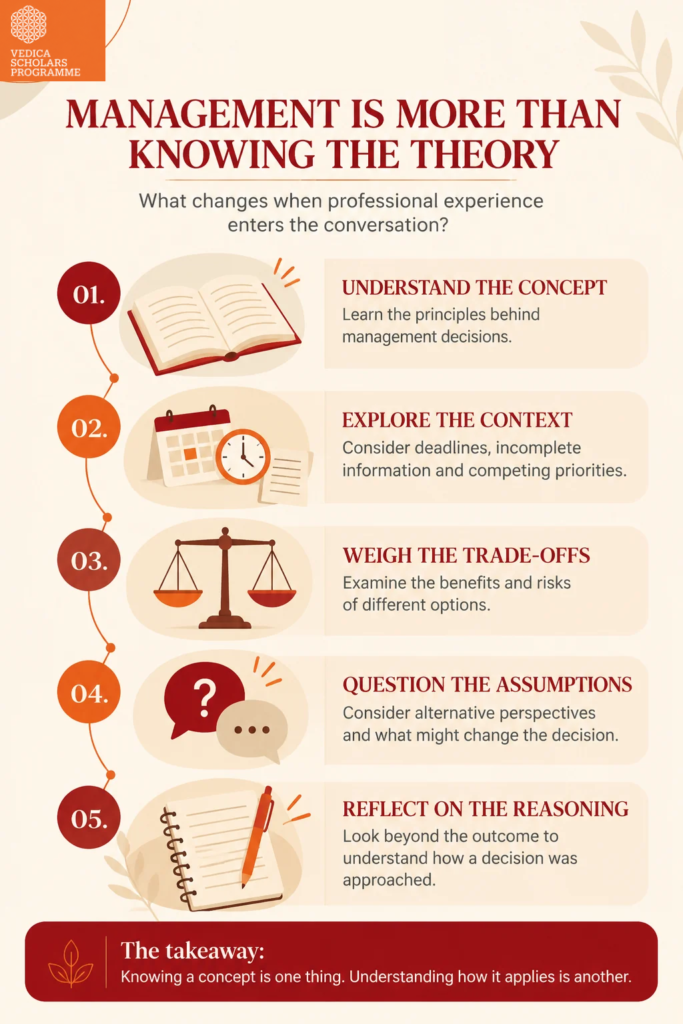
In a classroom, concepts such as opportunity cost, stakeholder management and risk can be explained through definitions and examples. In a workplace, however, applying them is rarely straightforward. Decisions may involve incomplete information, tight deadlines, conflicting opinions and limited time to consider every option.
When an experienced professional explains how they approached a decision, students can gain a clearer understanding of the reasoning behind it. They can consider which factors mattered, what alternatives were available and why certain options were chosen over others. They may also hear about uncertainties that existed before the outcome was known.
Consider a hypothetical example: A team must decide whether to launch a product on schedule or delay it to allow more testing. Launching on time might help the team meet a deadline, while delaying could provide more time to identify potential problems. Neither option is automatically right; the decision depends on the circumstances and the risks involved.
An example like this illustrates the difference between knowing what a trade-off means and considering how one might approach it in practice. It also shows why understanding the reasoning behind a decision can be just as important as knowing its outcome.
What Students Can Learn Beyond the Textbook
Listening to experienced professionals can expose students to different ways of thinking about workplace situations. Depending on the subject discussed, they may gain insights into:
- How decisions are approached when information is incomplete.
- What different professional responsibilities involve in everyday working life.
- How a challenge can look different from the perspective of different people within an organisation.
- How professionals reflect on decisions and consider what they might do differently.
An important takeaway is that experienced professionals do not necessarily approach the same problem in the same way. Their decisions may reflect different priorities, responsibilities and circumstances.
Hearing these perspectives can encourage students to question their assumptions rather than immediately settle on one answer. It can also help them recognise that management decisions often involve weighing competing considerations instead of following a single, universally applicable solution.
How Workshops Turn Listening into Participation
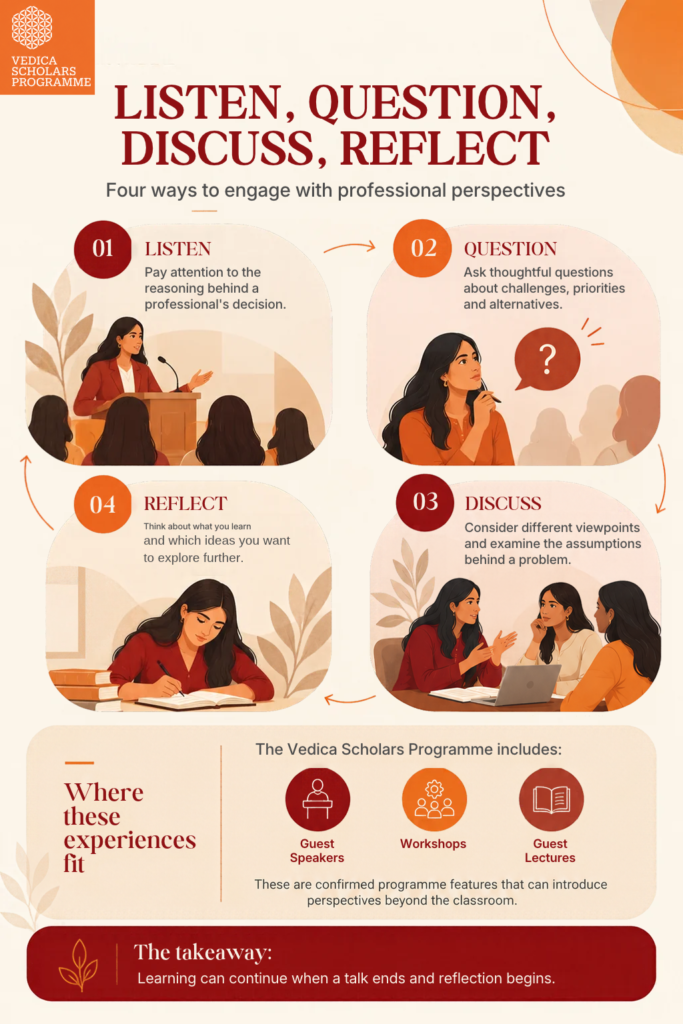
A guest talk gives students an opportunity to listen and learn from another person’s experience. A workshop can offer a different kind of engagement by inviting participants to discuss ideas, ask questions and consider possible approaches to a problem.
This is where practical management training becomes easier to understand. Rather than simply hearing an explanation, participants may have opportunities to examine an idea and think about how it could apply in a particular situation.
For example, consider a discussion about a decision made using incomplete data. Asking what might change if the initial information turned out to be incorrect could encourage participants to examine the assumptions behind that decision. It shifts attention from simply remembering an answer to thinking about the information and judgement that informed it.
The value of this kind of discussion lies in the opportunity to explore different viewpoints. Questions can reveal gaps in understanding, while considering alternative approaches can help students think more carefully about the choices involved in a problem.
The format and activities of individual workshops may vary, but discussion and reflection provide useful ways to explore management concepts beyond their definitions.
What This Means for Future Management Careers
Management roles can involve a wide range of responsibilities, and a job title alone does not always reveal what the work looks like day to day. Hearing professionals describe their responsibilities can help students develop more specific questions about their interests and possible career directions.
For instance, students might ask themselves:
- Do I enjoy making decisions when the outcome is uncertain?
- Would I enjoy coordinating people, tasks and competing priorities?
- What kinds of problems hold my attention?
- Which professional responsibilities would I like to understand better?
These questions do not need immediate answers. They can help students reflect on what interests them and identify areas they would like to explore further.
Guest sessions cannot determine which career will suit an individual or guarantee a particular outcome. However, learning about different professional responsibilities can give students a more informed starting point for thinking about the working environments and challenges they may encounter.
How Guest Sessions Fit Into a Leadership Development Programme
The Vedica Scholars Programme offers the Post Graduate Programme in Management Practice and Leadership. Its confirmed features include Guest Speakers, Workshops and Guest Lectures, Programme Mentors and Shadow a Woman Leader.
Guest Speakers, Workshops and Guest Lectures are particularly relevant to the subject of this article because they relate to learning from perspectives beyond the classroom. Such experiences can complement structured teaching by allowing students to consider management concepts in a broader professional context.
Programme Mentors and Shadow a Woman Leader are additional features of the Vedica Scholars Programme, although this article does not explore their specific formats or activities in detail.
The examples in this article illustrate the general value that professional perspectives and workshop discussions may offer. They should not be taken as descriptions of individual programme sessions or guarantees of particular learning outcomes. Prospective Scholars should consult the official programme information for current details about its features.
Frequently Asked Questions
1. What is the value of guest sessions in management education?
Guest sessions can introduce students to professional perspectives and illustrate how workplace decisions may involve uncertainty, competing priorities and practical constraints. They can also give students ideas to reflect on when considering management concepts.
2. How can workshops support practical management training?
Workshops may give participants opportunities to discuss ideas, ask questions and consider different approaches to a problem. These activities can encourage reflection and help participants identify areas they would like to understand better.
3. How can students get the most from a guest session?
Students can listen for the reasoning behind a decision, rather than focusing only on its outcome. Preparing a thoughtful question in advance and reflecting on the discussion afterwards can also help them engage with the ideas presented.
4. Can guest sessions help students explore management careers?
Yes. Hearing professionals discuss their responsibilities can help students develop a clearer picture of different roles and the challenges they may involve. These insights can support career reflection, although they cannot determine which role will suit an individual.
5. Which features of the Vedica Scholars Programme are mentioned in this article?
The article discusses Guest Speakers, Workshops and Guest Lectures as features relevant to learning from professional perspectives. It also mentions Programme Mentors and Shadow a Woman Leader as other confirmed features of the Vedica Scholars Programme.
Conclusion
Understanding management involves more than learning definitions or memorising the outcomes of decisions. It also means considering the reasoning behind choices, recognising competing priorities and being willing to question initial assumptions.
Guest sessions and workshops can complement classroom learning by introducing students to professional perspectives and opportunities for discussion. Within a leadership development programme, these experiences can provide additional ways to explore management concepts and reflect on how they might apply beyond the classroom.
At the Vedica Scholars Programme, Guest Speakers, Workshops and Guest Lectures are among the confirmed features relevant to this kind of learning. Their significance lies in the opportunity to consider ideas from different perspectives and develop a deeper understanding of the questions that management can raise.