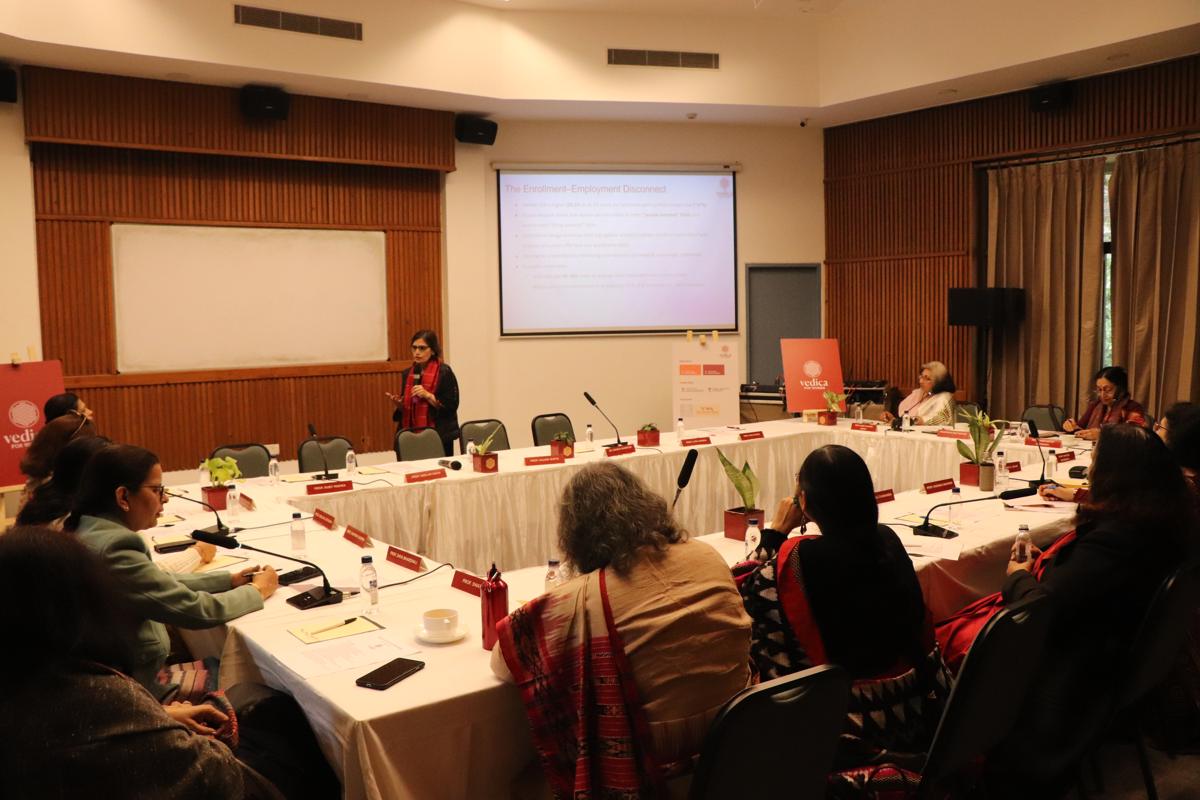
Picture a mid-sized retailer deciding whether to cut the price of its best-selling product by ten per cent. The marketing team expects a sales lift. Finance needs to understand what that increase could mean for margins. Operations has to work out whether the supply chain can keep pace with new demand. Each team sees the same decision differently, and every option involves a trade-off. This is the kind of problem practical management training is meant to prepare people for. At the Vedica Scholars Programme, the Management Practice Track connects concepts to real business challenges through live case discussions.
Practical Management Training Starts With Real Business Problems
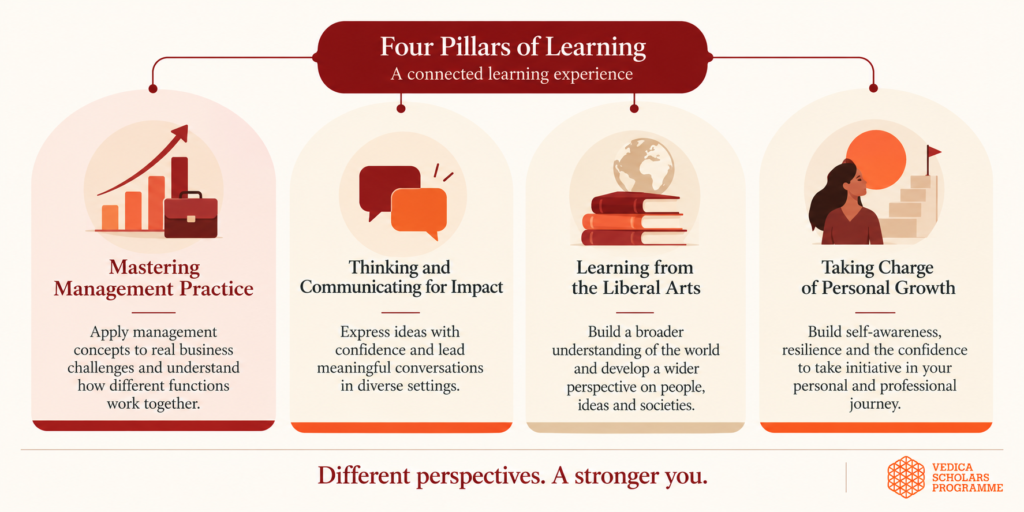
Mastering Management Practice is one of the four pillars of learning at the Vedica Scholars Programme, alongside Thinking and Communicating for Impact, Learning from the Liberal Arts, and Taking Charge of Personal Growth. Rather than treating subjects as separate boxes to tick, the track brings together five focus areas:
- Marketing and Strategy
- Finance and Accounting
- Operations and Supply Chain
- Economics and Policy
- People and Organisations
The aim is not simply to study each subject in isolation. It is to help Scholars understand how these areas interact in a real organisation. A pricing decision, for example, can affect marketing strategy, profit margins and the ability of operations to meet demand.
Why “Practice” Matters Here
At the Vedica Scholars Programme, this pillar asks Scholars to apply frameworks to genuine business situations rather than studying them purely in the abstract. That is the difference between knowing a concept and being able to use it when a real decision has to be made.
Two Special Courses listed on the Management Practice Track page help bring this approach to life. Case Workshops give Scholars practical sessions in which they apply management concepts through live case discussions. The Project Manager Series uses simulation-based modules to apply learning from across courses to real scenarios. This is what business management practice looks like in the classroom: concepts applied, not just recited.
Where This Sits Alongside the Rest of the Curriculum
Management practice does not operate on its own at the Vedica Scholars Programme. It works alongside Thinking and Communicating for Impact, which focuses on expressing ideas with confidence and leading meaningful conversations, and Learning from the Liberal Arts, which broadens Scholars’ understanding of the world beyond business.
Together, these pillars help Scholars understand business decisions, communicate their reasoning and consider the wider context in which those decisions are made.
The Stated Aim: Financial Freedom
The Vedica Scholars Programme website describes the Mastering Management Practice pillar as building “problem-solving and decision-making skills that open doors to financial freedom.” This is an aspiration, not a promise of any individual outcome. It reflects the Vedica Scholars Programme’s stated emphasis on developing skills that Scholars can apply to decisions and challenges in working life.
Where Leadership Comes In
The Vedica Scholars Programme offers the Post Graduate Programme in Management Practice and Leadership, bringing management practice and leadership together in its name. Mastering Management Practice is one of its four pillars of learning. The track page describes it as helping Scholars discover what it takes to run teams, drive strategy and make decisions that move businesses forward.
The Shadow a Woman Leader module also appears in the track’s course list, connecting the curriculum with an opportunity to learn about leadership in practice. The other three pillars complement this learning.
Where AI Fits In
AI is part of the wider Vedica Scholars Programme curriculum. The homepage describes AI fluency as built into the learning experience, while the official FAQs confirm a dedicated AI for Managers course and a hands-on Gen AI Portfolio Workshop. In the workshop, every Scholar builds a working, no-code AI agent in her chosen domain: marketing, consulting, finance, HR or operations. These are two distinct offerings.
Frequently Asked Questions
1. What does “management practice” mean at the Vedica Scholars Programme?
It is the applied side of management learning: connecting marketing, finance, operations, economics, and people-related topics to real business challenges through live case discussions.
2. Does the Management Practice Track stand alone, or does it connect to the rest of the Vedica Scholars Programme?
It is one of four pillars of learning, alongside Thinking and Communicating for Impact, Learning from the Liberal Arts, and Taking Charge of Personal Growth.
3. Does the learning include simulations?
Yes. The Management Practice Track page describes the Project Manager Series as simulation-based modules that apply learning from across courses to real scenarios.
4. Is there case-based learning?
Yes. Case Workshops give Scholars practical sessions in which they apply management concepts through live case discussions.
5. Is AI part of the learning?
Yes. The wider Vedica Scholars Programme curriculum includes a dedicated AI for Managers course and a hands-on Gen AI Portfolio Workshop, where every Scholar builds a working, no-code AI agent in her chosen domain.
In Closing
The retailer’s pricing question shows what management practice means at the Vedica Scholars Programme: a decision that crosses marketing, finance and operations. Through live case discussions, Case Workshops and the Project Manager Series, Scholars explore how different business functions interact. Alongside the other three pillars, this learning helps connect management concepts with the decisions organisations face in practice.